Weather's Hidden Hand: How Environmental Factors Shift Wagering Lines in Outdoor Sports
Hugo Hartmann · Aug 9, 2026

Weather's Hidden Hand: How Environmental Factors Shift Wagering Lines in Outdoor Sports
Weather patterns exert measurable influence over performance metrics in outdoor sports, and betting markets respond by adjusting lines on totals, spreads, and player props accordingly. Data from multiple seasons demonstrates consistent correlations between temperature, wind speed, precipitation, and outcomes in baseball, football, golf, and tennis. Bookmakers incorporate forecast models into their algorithms, while bettors who track these variables often identify edges before lines stabilize.
Temperature and Its Effects on Player Output
Higher temperatures increase ball travel distances in baseball because warmer air reduces air density, allowing batted balls to carry farther. Studies tracking Major League Baseball games show home run rates rise by approximately 5 to 10 percent when game-time temperatures exceed 85 degrees Fahrenheit compared to games below 65 degrees. Pitchers also experience elevated velocity in moderate heat, yet fatigue sets in faster during prolonged exposure, which shifts strikeout and earned-run averages in later innings. In golf, warmer conditions correlate with lower scoring averages on courses where greens firm up, altering birdie and par expectations that directly feed into tournament totals.
Wind Speed and Direction in Precision Sports
Wind alters trajectory in every sport that involves airborne objects. In baseball, a sustained 10-mile-per-hour crosswind can suppress home run totals by 15 percent at certain ballparks, while a tailwind boosts them by similar margins. Football totals markets move noticeably when wind gusts surpass 15 miles per hour because field-goal accuracy declines and passing yards drop. Tennis matches on outdoor courts show serve percentages falling when gusts exceed 12 miles per hour, prompting oddsmakers to shade under totals and adjust player prop lines on aces and double faults. Observers note that professional bettors monitor real-time anemometer readings at venues to anticipate these adjustments hours before official lines post.
Precipitation and Surface Conditions
Rain changes field conditions rapidly. In American football, wet surfaces reduce rushing efficiency and increase fumble rates, which pushes totals lower in affected games. Baseball grounds crews manage tarps and drainage, yet even light drizzle can suppress batting averages on slick surfaces. Horse racing tracks report different speed figures on sealed versus sloppy surfaces, and bookmakers publish updated morning-line odds once precipitation forecasts update. Golf tournaments often suspend play or shorten rounds when lightning risk appears, directly affecting daily fantasy and prop markets. Data collected across multiple European and North American venues indicates that games played in steady rain produce scoring outputs 12 to 18 percent below seasonal averages.
How Markets Incorporate Forecasts
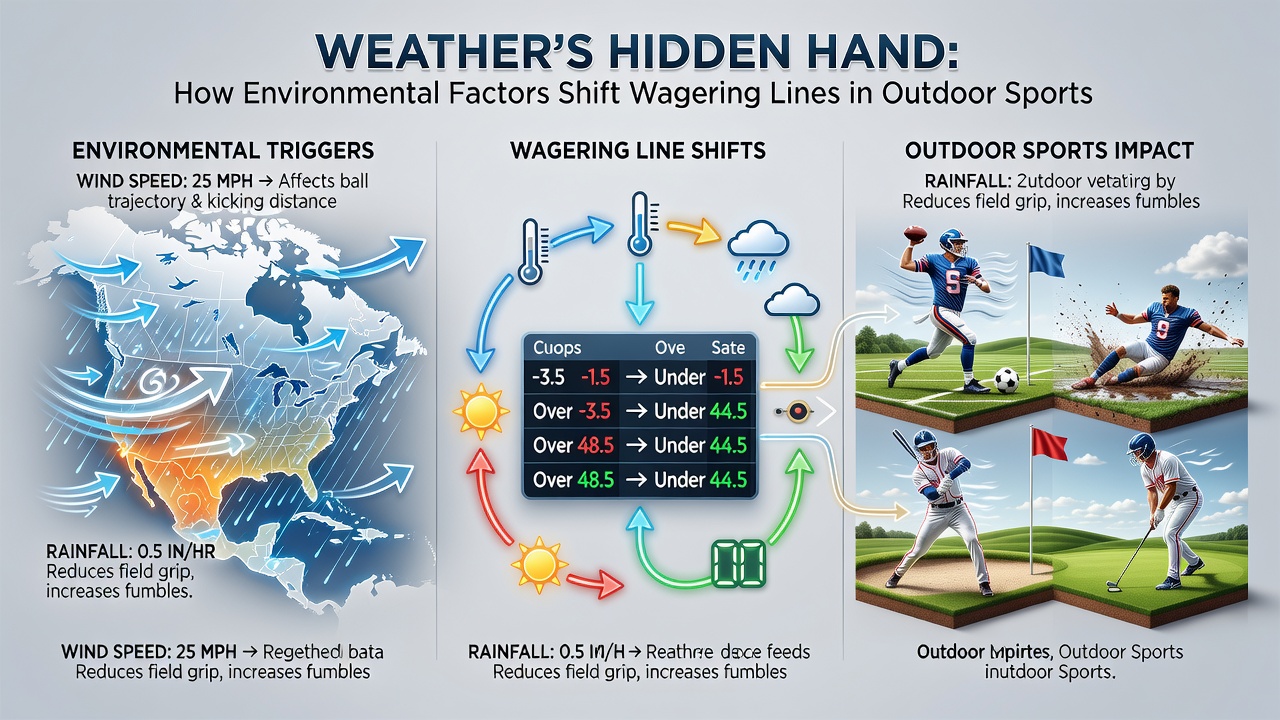
Betting operators integrate meteorological data feeds into pricing engines, and lines can shift within minutes of updated forecasts. In August 2026, several major outdoor events coincided with shifting jet-stream patterns that prompted noticeable movement in totals markets days before first pitch or kickoff. Sharp bettors who cross-reference National Weather Service bulletins with historical venue data often place early wagers before recreational money arrives. Industry reports from the American Gaming Association and academic analyses published in the Journal of Quantitative Analysis in Sports confirm that weather-adjusted models improve predictive accuracy by measurable percentages over baseline statistics that ignore environmental variables.
Regional Variations and Long-Term Trends
Venues in different climates exhibit distinct weather signatures. Coastal stadiums experience more marine-layer effects that suppress offense, while inland ballparks see greater temperature swings between day and night games. Australian and Canadian regulatory bodies have published summaries showing similar patterns in cricket and hockey outdoor variants, where humidity and wind interact with equipment performance. Over the past decade, increased use of retractable roofs and advanced drainage systems has reduced but not eliminated weather impacts, and markets continue to price residual risk accordingly.
Conclusion
Environmental conditions remain a quantifiable driver of results in outdoor sports, and betting lines reflect these influences through systematic adjustments. Temperature, wind, and precipitation each produce documented statistical shifts that operators and bettors monitor using public forecast data and historical performance records. Those who integrate meteorological information into their analysis gain access to edges that appear before final line movements settle.